
Landscape Lighting Design & Installation | Maryville, TN
Low-voltage landscape lighting in Maryville, TN. Tree uplighting, path lights, wash lighting and architectural accents designed, installed and maintained.
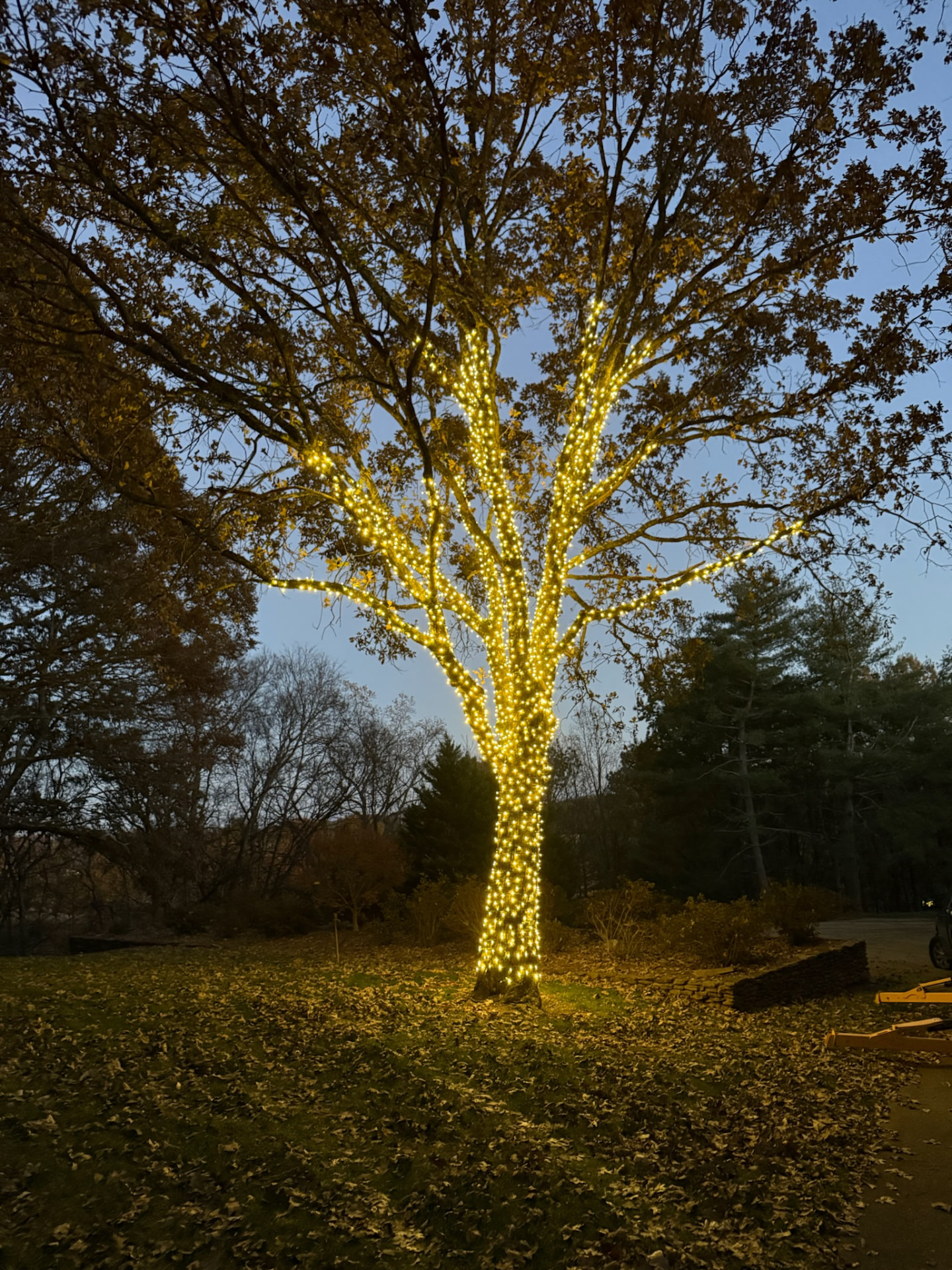
Landscape lighting extends the season past Christmas. We design low-voltage systems that light the way to your door, wash your stonework and brick, and uplight the mature hardwoods that make East Tennessee properties what they are.
Good landscape lighting is about restraint — the right fixture count, correct beam spread, and glare hidden from the sightlines where you actually stand. We plan it on-site at dusk, not from a catalog.
Brass and cast-aluminum fixtures, buried runs, and transformers sized with headroom so the system can grow with your landscaping.
What's included
- Dusk walk-through and lighting plan
- Tree uplighting and moonlighting
- Path, step and retaining-wall lighting
- Facade wash and architectural accents
- Buried low-voltage runs and sized transformers
- Annual tune-ups and re-aiming
Fixture selection: brass and cast aluminum versus plastic
We install brass and cast-aluminum fixtures rather than the plastic composite fixtures sold in most home-improvement stores. Brass in particular develops a natural patina over a few seasons outdoors that actually looks better with age, and it holds up to the humidity and freeze-thaw cycles typical of a Blount County winter far longer than plastic housings.
Fixture choice also depends on the job: well lights for uplighting a mature oak need a different beam spread and housing than a path light along a walkway near Fort Loudoun Lake, where ground moisture and occasional flooding are real considerations.
We size transformers with headroom above the current fixture count so the system can grow, adding two or three fixtures later doesn't require a new transformer if we planned correctly at install.
Designing on-site at dusk instead of from a plan
Landscape lighting looks very different on paper than it does standing in your yard at 6pm in November. We do the design walk-through at dusk, testing beam angles and fixture placement in real light conditions rather than guessing from a satellite photo.
Glare control matters as much as placement. A poorly aimed uplight is more noticeable, and more annoying to neighbors and passersby, than no light at all. We aim fixtures from the sightlines where people actually stand or drive, not just from directly in front of the tree.
Buried low-voltage wire runs are trenched along planting bed edges rather than left surface-mounted, so mowing and mulching don't disturb the system season after season.
Operating cost and year-round maintenance
Low-voltage LED landscape systems typically cost only a few dollars a month to run on a timer or photocell, which is a fraction of what most homeowners assume before getting a quote. That makes it realistic to run the system every night rather than only on special occasions.
We offer annual tune-ups to re-aim fixtures that have shifted from lawn work or settling soil, replace any failed LED modules, and clean lenses that have clouded from irrigation overspray or mud splash.
If you already have a landscape system, whether we installed it or not, we can service, expand or re-aim it rather than starting over, which is usually cheaper than a full replacement.
Because the fixtures run year-round rather than just six to eight weeks a season, we recommend an annual inspection timed for spring, after winter freeze-thaw cycles and before summer landscaping work begins, so any settled fixtures or nicked wires get caught before they become a bigger repair.
Homeowners considering landscape lighting alongside a seasonal Christmas lease often ask whether the systems interfere with each other; they don't, since landscape fixtures run on their own low-voltage circuit separate from the seasonal display's timer and power runs.
Step-by-step process from consultation to final walk-through
We start with a daytime site visit to note existing plantings, hardscape, drainage and any buried utilities before recommending a single fixture, since digging blind on an East Tennessee lot risks hitting an irrigation line or a septic field.
A dusk walk-through follows, where we test actual fixture placement and beam angles in real light rather than working off a plan alone, adjusting on the spot for trees, shrubs or grade changes a daytime visit alone wouldn't reveal.
Trenching for buried low-voltage wire happens along planting bed edges and under mulch lines, keeping the system invisible during the day and undisturbed by routine mowing.
A final night walk-through with the homeowner confirms every fixture is aimed correctly and glare-free from the driveway, porch and street before we consider the job finished.
Pricing factors for a landscape lighting system
Fixture count is the primary cost driver, more trees to uplight, more path segments, more architectural features to wash, means more fixtures and more wire runs. We price per fixture plus labor rather than a flat per-project number, so you see exactly what each addition costs.
Property size and layout matter almost as much as fixture count. A long driveway near Six Mile or a sprawling lot near Louisville Point needs longer buried runs and a transformer sized for the added distance, which adds material cost beyond the fixtures themselves.
Existing infrastructure changes the number too. Adding to a system we already installed, or even one installed by another company, usually costs less than starting from a bare property with no buried wire or transformer in place.
Who benefits most from a landscape lighting investment
Homes with mature hardwoods, stacked-stone retaining walls or a distinctive brick or stone facade get the most visual return from landscape lighting, since uplighting and wash lighting are built to highlight texture and shape that's already there.
Properties with uneven walkways, sloped driveways or steps benefit from path and step lighting as much for safety as for looks, especially relevant on the terraced lots common around the ridgelines above Maryville.
Homeowners who already lease seasonal Christmas lighting often add landscape lighting as a year-round complement, since the two systems can share design sensibility, warm-white tones, consistent fixture placement, without competing for attention each December.
Landscape Lighting across Blount County & Knoxville
Landscape Lighting questions
- Is landscape lighting expensive to run?
- No. LED low-voltage systems typically cost a few dollars a month to operate and run on timers or photocells.
- Can you service a system I already have?
- Yes. We repair, re-aim, replace failed fixtures and expand existing low-voltage systems.
Related services
Christmas Light Installation
Lease your display: design, install, maintenance, takedown and storage — all included.
Holiday Lighting
Wreaths, garland, trees, roof lines and yard displays designed as one look.
Residential Christmas Lights
Lease a custom display for your home — maintenance, takedown and storage included.
Ready for the best-looking house on the street?
Free on-site design consultation and a fixed written price. No obligation.